

A trek through the vegetable garden over the weekend revealed that many edible plants have survived the winter season and are thriving now that spring has arrived.
One of the benefits of planting a fall vegetable garden is that the harvest does not end with the arrival of winter, and in many cases those cold hardy veggies will pick right up where they left off just as soon as the temperatures begin to warm up even slightly.
It’s only mid-March and we’re still watching the snow fall here in Central PA but as you can see there is plenty growing in the garden and a few maturing vegetables that are ready to be harvested and enjoyed!
I haven’t lifted a finger or done anything other than to set foot into the garden, but here is a sampling of what was waiting on the first official day of spring:

Strawberry plant just beginning to leaf out.

Well I did plant a few saffron bulbs in the past, but they are supposed to be fall bloomers, so these must be ordinary (but still cool) crocuses springing up in the middle of one of the vegetable beds.

Surprisingly it looks like a few celery plants have survived the winter and are beginning to show signs of healthy re-growth.

Collard Plants, like many leafy greens don’t even flinch at anything that winter can send their way.

Mmmm, yummy… Fresh kale leaves, tender, frost-seasoned, and already large enough to harvest and enjoy.


Beautiful and ornamental variegated collard green. This rare variety is very hardy and even the mature plants seem to make it through the winter just fine. Not as productive as other collards but it’s just as edible and worth growing for its unique appearance alone.
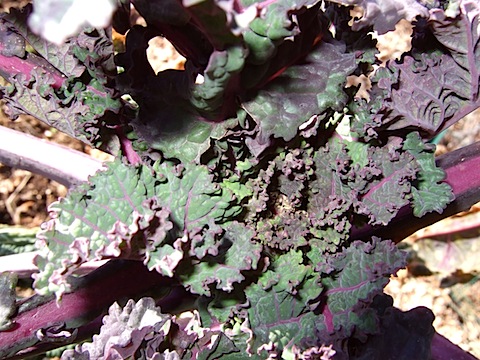
Wild kale mix plant, this one displaying a reddish color and a frilly leaf shape. One of my all time favorite veggies.
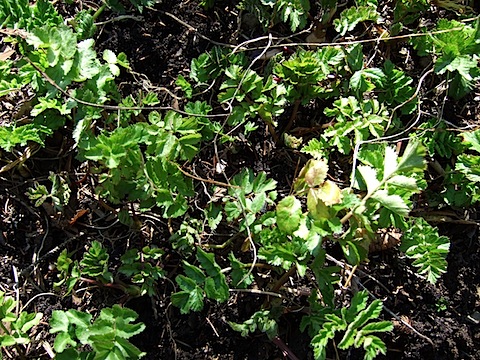
The parsnips really should have been harvested during the fall, but I usually over winter a couple of the plants in the garden to bear the flower clusters and seed heads that are attractive to beneficial insects during spring and summer.
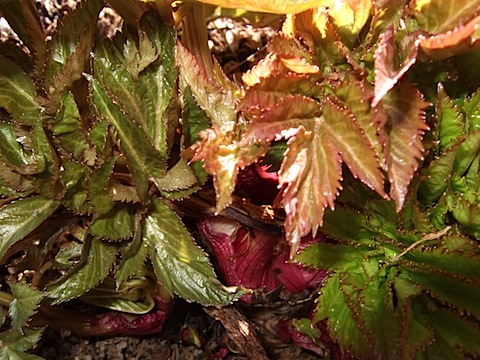
Angelica, a medicinal, perennial, herb that will grow to well over five feet in height by summertime, this one is off to a good and early start.
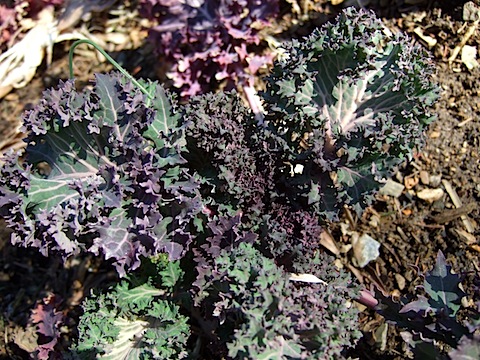
Another kale variety, you can never have too many of the versatile kales growing in your garden. In the spring when most vegetable crops are just getting established, over wintered kales will be ready for harvesting.
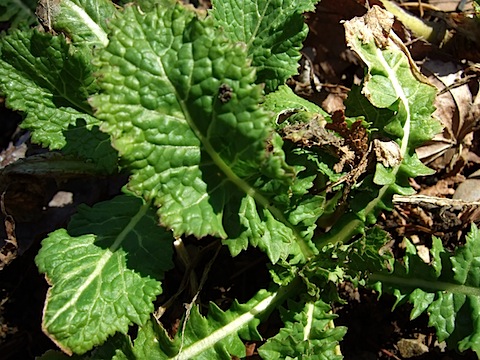
Yet another nutritious leafy green growing in the raised vegetable beds, this one is a turnip green. While there are actually plump turnip roots hiding beneath those leaves they’re not too edible after spending the winter on the soil’s surface, but these greens will be fine.
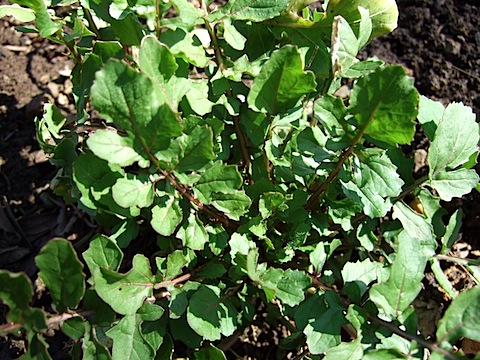
Ice-bred Arugula developed by Brent Grohsgal of Even Star Farms. Not your everyday variety of arugula, these were bred to withstand cold growing conditions and I’d say they are successful at it. These plants were sown during the fall and have survived in the open garden without a bit of winter protection.

Potato Onions growing through a thick leaf mulch. Joined by gourmet garlic, they were both planted in the fall and have been up and growing happily since early this month.

Salsify… or is it Scorzonera, (aka oyster plants)? Yeah I get their names confused sometimes one has a narrow leaf and the other is much broader. Oh, and I still haven’t really figured out what to do with the roots of either of them in the kitchen.
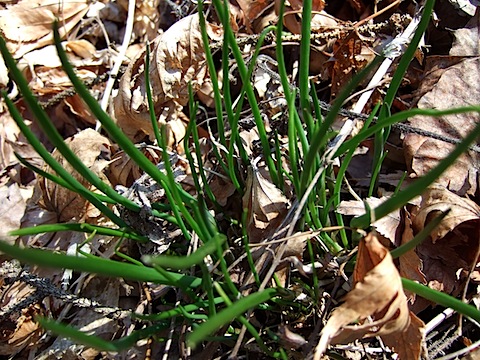
Chives, it won’t be long before they are tall, bushy, and completely covered with purple flowers that are edible and impart the same chive-like flavor.
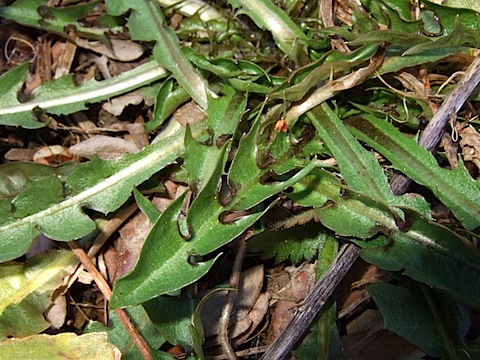
Of course a few weeds have made their debuts also, here’s a dandelion plant finding its way through a mulch cover.

Chickweed is another edible weed and wild plant that you can discover, harvest, and enjoy before most gardeners have even planted their first seeds out into the garden beds.
12 Responses
There are more frost hardy plants than we realize!
TopVeg
Wonderful pictures! I didn’t realize that some of the vegetables that we grow in Autumn and Winter here in Texas were hardy enough for PA. We had collards, broccoli, kale, swiss chard, carrots and lettuce survive the winter. By the way I have added you to the blogroll. Enjoy your posts! http://www.charamongarden.wordpress.com
Beautiful! We are still blanketed with snow here in southern Ontario, but it is slowly beginning to melt. I am anxious to get out and see what action is taking place beneath the snow.
Hi,
Hopeful words and beautiful pictures! Thought you and your readers might be interested in my easy, non-chemical, “step-and-twist” method for dandelion control. Great for schools and playgrounds because kids can do it and not get dirty. Read more in the What Works section on my IPM site: http://www.GeorgeRotramel.com.
Best Regards,
George
Loved the close up photography.
Dandelions are edible, so I understand. Have you tried them? I understand that they’re a diuretic!
Rob
Wow! I am amazed at all of the things you grow in your winter garden…I am in Portland, OR and am looking forward to seeing what I can overwinter next year.
Thanks for the comments and emails in response to this post. It is incredible to see the many vegetable crops that will grow during autumn and are capable of surviving the winter season without any form of protection, and the best part is that they will re-grow or yield early harvests of garden fresh produce before the soil can even be worked in the springtime.
Rob, the dandelions are very much edible and have a reputation for providing all sorts of health and medicinal benefits. I do eat them but they can be strong flavored and bitter tasting, so I use a small amount mixed in with other greens or blended into a smoothie.
Hi, I have a question about chickweed. Are the leaves a little fuzzy? I am trying to learn how to recognize it. I have heard of star chickweed and of mouse-eared chickweed. But, now is the one of which you write still another kind? I wonder if they are all good to eat.
Hi Barbee’, I think the chickweed leaves are pretty smooth and I have never noticed much in the way of fuzz on the plant. There are different varieties of chickweed and I believe the one that grows around here is the variety that is called “Common Chickweed.”
We usually have mild winters here in Texas (except last year) so can any summer veggies survive the winter (like cukes, peppers, tomatoes)? What about container plants?
Hi Carrie…a fellow-Texan here. Where do you live? In most of the state, cucumbers, peppers and tomatoes can only be grown in greenhouses (hoop houses, etc). But you can grow a bunch of other vegetables…Swiss Chard, most members of the cabbage family, carrots, parsnips and other cool weather crops.